

The Rise of Everyday DIY: How Power Tools Are Changing Modern Homes
April 28, 2026

Not too long ago, power tools were almost exclusively associated with professionals. Contractors, carpenters, and technicians depended on them, while most homeowners kept their distance. When something broke, the usual response was simple: hire someone to fix it.
That perspective is gradually shifting.
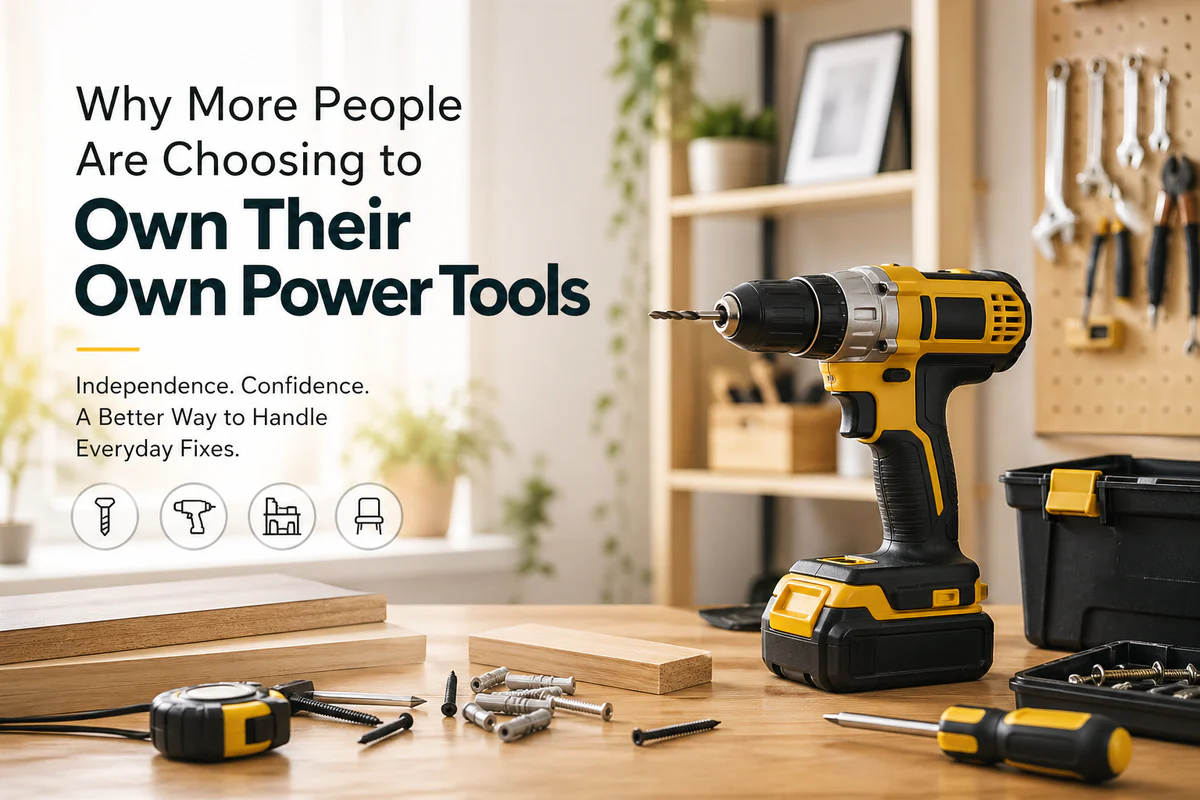
Today, more households are choosing to keep a few essential power tools on hand—not to take on large-scale projects, but to handle everyday tasks with greater independence.
The Real Cost of Outsourcing Small Repairs
In many homes, minor issues are common:
- A cabinet hinge comes loose
- A table leg starts to wobble
- A shelf needs to be installed
- A door no longer closes properly
Individually, these aren’t major problems. Yet they often go unresolved for long periods.
The reason is straightforward. Hiring a professional for small jobs can feel disproportionate—scheduling takes effort, costs add up quickly, and availability isn’t always convenient. Over time, people end up living with these small inconveniences instead of fixing them.
As they accumulate, they quietly affect the comfort and functionality of a home.
Most Household Fixes Aren’t Complicated
A common realization among new tool owners is that many home repairs are actually quite simple.
Tasks like tightening screws, drilling holes, or assembling furniture don’t require advanced expertise. What they do require is control, accuracy, and a bit of confidence—things that can be hard to achieve with manual tools alone.
Power tools help bridge that gap. They reduce effort, improve precision, and make it easier to focus on the task rather than the struggle.
They don’t make tasks more complex—they make them easier to complete.
Making It Easier to Get Started
For most people, the biggest obstacle isn’t the difficulty of the task—it’s the hesitation to begin.
Modern power tools are designed with everyday users in mind. Intuitive controls, comfortable grips, and built-in safety features make them more approachable. Instead of relying on strength or technical knowledge, they support steady, careful use.
This matters. When tools feel accessible, people are more likely to take that first step. And once they successfully handle one small repair, the next feels much less daunting.
A Shift in Mindset: From Avoidance to Confidence
Owning a power tool can subtly change how people view their living space.
A loose screw is no longer something to ignore.
Installing a shelf becomes a weekend plan instead of a delayed idea.
This shift isn’t about productivity—it’s about confidence. Knowing you can deal with small problems as they arise creates a sense of control.
That confidence often carries over. People become more willing to adjust, improve, and personalize their homes. The space starts to feel flexible rather than fragile.
Finding the Right Balance
Not every home needs a full set of tools. But for many, owning one or two basics offers a practical balance between relying entirely on others and overcommitting.
If you regularly assemble furniture, make small repairs, or adapt your space to changing needs, having your own tools becomes less of a luxury and more of a sensible choice.
It’s not about doing everything yourself.
It’s about having the ability when you need it.
A Subtle Shift in Everyday Living
The growing presence of power tools in homes reflects a broader change in lifestyle. More people are choosing to take a hands-on approach to maintaining their spaces instead of outsourcing every small inconvenience.
This doesn’t require expertise—just a willingness to try, some curiosity, and the right tools.
Sometimes, fixing something small isn’t just about the repair itself. It’s about regaining a sense of control in the place you live.
Leave a Reply